
Slopes Managed for Stability and Planting
Garden Retaining Walls in Boerne for properties with erosion problems and uneven terrain
Hill Country properties frequently feature significant grade changes that cause soil erosion during heavy rain, create unusable sloped areas where lawn mowing becomes hazardous, and limit planting options because water runs off before soaking into root zones. Garden retaining walls installed by Two Birds Outdoor Services address these conditions by creating level terraces that hold soil in place, manage water flow down slopes, and establish stable planting beds where erosion previously prevented vegetation from taking root. Walls serve both structural and aesthetic functions, transforming steep unusable grades into tiered garden spaces or level lawn areas that expand how you use your property.
Installation requires excavating into the slope to establish a level base, setting wall materials with proper backfill and drainage aggregate behind the structure, and engineering the wall height and setback to handle soil pressure without failing. Walls exceeding three to four feet in height require additional reinforcement and drainage provisions to manage hydrostatic pressure that builds up after prolonged rain.
Schedule a site evaluation to assess slope severity, soil conditions, and drainage patterns that determine wall design and placement requirements.
Why Retaining Walls Work for Sloped Properties
Retaining walls function by holding back soil on slopes steeper than the soil's natural angle of repose, which prevents erosion and creates level planting or lawn areas where terrain previously couldn't support stable vegetation. Proper construction includes drainage provisions like weep holes or perforated pipe behind the wall that prevent water pressure from building up and pushing the structure outward, which is the primary cause of wall failure in this region's clay-based soils that retain moisture.
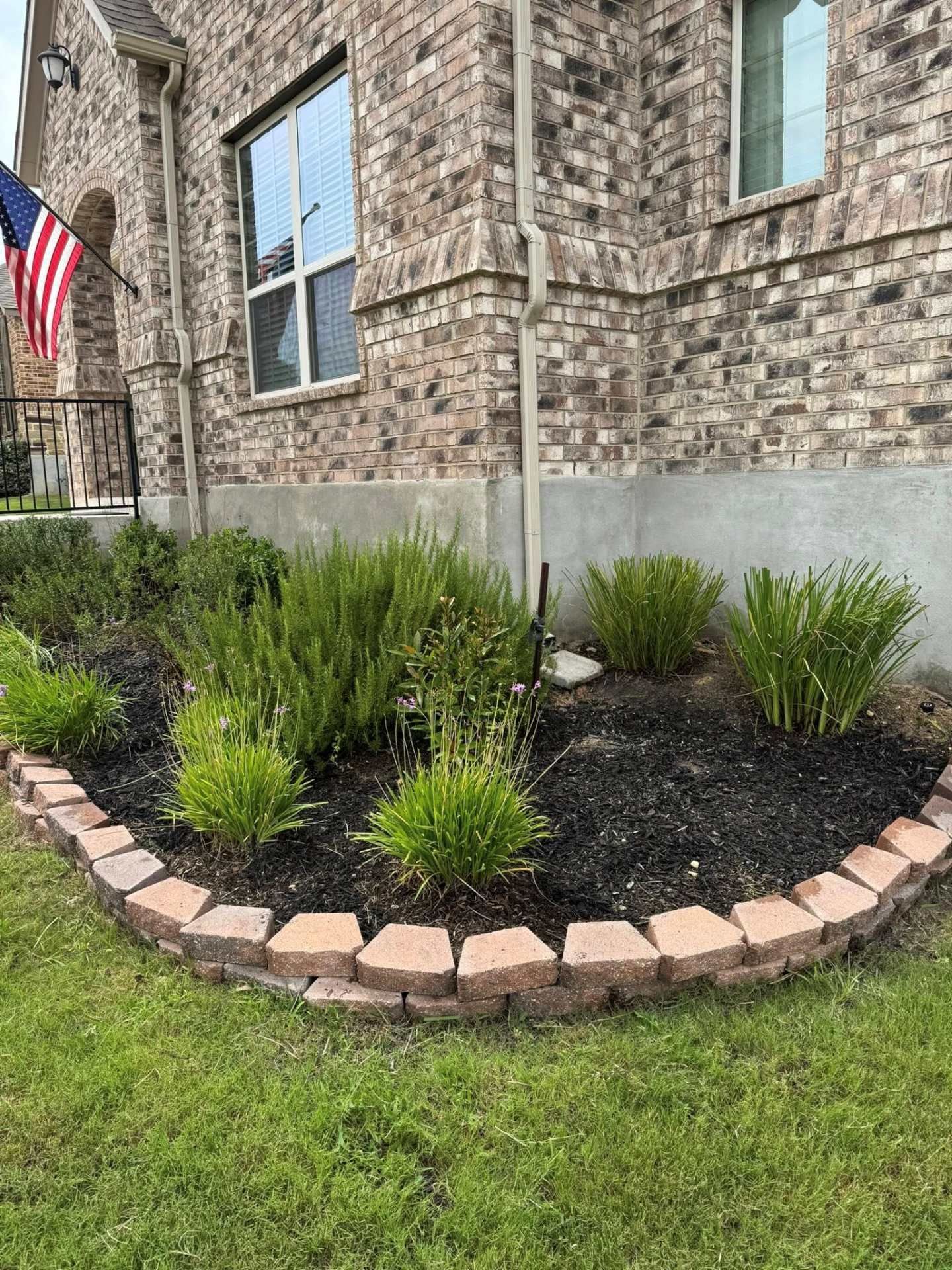
After installation, you'll see defined level terraces where soil remains in place during storms instead of washing downhill, planting beds that retain moisture long enough for roots to absorb it rather than shedding water down the slope, and transitions between yard elevations that allow safe mowing and foot traffic. Garden beds built into or above retaining walls support deeper root growth in quality soil rather than the shallow rocky layers often found on natural Hill Country slopes.
Material options include natural stone stacked for a rustic appearance that blends with surrounding terrain, manufactured block systems that interlock for structural stability, or poured concrete when the wall must support vehicle loads or significant height differences. Design choices account for how the wall integrates with walkways, garden beds, or patio spaces that may connect to the terraced areas created by the structure.
Homeowners dealing with sloped properties ask about wall height limits, drainage requirements, and how retaining walls coordinate with landscape improvements before committing to installation.
What Property Owners Usually Ask
What determines retaining wall height and design?
Wall height depends on the total elevation change you need to manage and whether the slope can be terraced with multiple shorter walls rather than one tall structure. Walls under four feet typically don't require engineering stamps in most residential applications, while taller walls need structural calculations and may require permits.
How do you prevent water buildup behind retaining walls?
Drainage aggregate backfilled behind the wall allows water to percolate downward to weep holes or perforated drain pipe at the base that diverts water laterally away from the structure. Without drainage provisions, hydrostatic pressure from saturated clay soil can push walls outward and cause failure.
What materials suit Boerne's terrain and climate?
Natural limestone or sandstone matches the local Hill Country aesthetic and handles freeze-thaw cycles without damage, while manufactured concrete block systems offer design flexibility with interlocking units engineered for structural stability on taller walls.
How do retaining walls integrate with garden beds?
Walls create raised planting areas with improved drainage and soil depth that support root growth better than shallow rocky slopes, allowing installation of garden beds directly above or adjacent to the wall where erosion previously prevented stable planting.
When is terracing with multiple walls better than one tall wall?
Terracing with two or three shorter walls costs less than engineering and building one tall structure, reduces visual impact by breaking up the elevation change, and creates multiple level planting or lawn zones rather than one large slope.
Two Birds Outdoor Services designs retaining walls based on your property's specific grade challenges and how you intend to use the terraced areas created by the structure. Contact us to review slope conditions and discuss wall options that provide long-term stability and expand usable landscape space.